SIM swap protection: US carrier rules from 17 December
· By Arman Murzabulatov, globeSIM team
In short
SIM swap protection becomes mandatory for US carriers on 17 December 2026. Before they move your number to a new SIM or eSIM, they must verify you securely and notify you, and they must offer a free lock. There is no exception for travellers, so make SIM changes at home.
What changes for US phone numbers on 17 December
From 17 December 2026, US wireless providers must follow new FCC rules before they move your number to a new SIM. The FCC published the date in the Federal Register on 17 November 2026 (FCC compliance notice in the Federal Register).
The rules come from an order the FCC released on 16 November 2023 against SIM swap fraud. In a SIM swap, a scammer gets your carrier to move your number to a SIM they control, and then receives your calls and texts.
For travellers, the change matters at three moments: moving your number to an eSIM or a new phone, replacing a lost phone abroad, and locking your account while you are away.
Which travel situations the rules touch
The rules apply when your US carrier changes the SIM behind your number. The rule text defines a SIM as a physical or virtual card, so moving your number to an eSIM is covered too.
| Situation | What the FCC rules require | What to do |
|---|---|---|
| Moving your number to an eSIM or a new phone | A secure identity check and an immediate notice to you | Do it at home, before the trip |
| Replacing a lost or stolen phone abroad | The same check, with no exception for travellers | Set up backup ways to verify you first |
| Your SIM change lock is on | No SIM change until you turn the lock off | Turn it off before you switch phones |
| A travel eSIM added next to your US line | Your US carrier is not asked to move your number | No SIM change, but the phone must be unlocked |
Does your trip involve a SIM change?
What will you do with your US number?
Keep the US SIM in the phone and add a travel eSIM
No SIM change, so the new checks do not come up.
Move the number to an eSIM or a new phone
Expect an identity check and a notice. Do it before you fly.
Replace a lost phone while abroad
Your carrier must still verify you. Prepare backup methods now.
How carriers must check that it is you
Before a SIM change, your carrier must use secure methods reasonably designed to confirm your identity. These methods must not rely on readily available biographical, account, recent payment or call detail information (FCC SIM swap order of 2023).
The FCC did not list approved methods. It declined to restrict codes sent by text message, but strongly encouraged carriers to use them only together with other secure methods, as part of multi-factor authentication.
- Immediate notice: the carrier must tell you about a SIM change request before it carries it out, for example by call, text, email or app notification.
- Failed attempts: carriers need procedures for failed identity checks on a SIM change request.
- Fraud help: a free, easy way to report fraud, a prompt investigation, and documentation of the fraud when you ask for it.
- Records: carriers track how many SIM change requests they get, how many fail or turn out to be fraud, and which checks they use, and keep these records for at least three years.
The FCC did not require a waiting period. Carriers may add a delay when they judge it necessary against fraud, but the FCC said this should not hold up legitimate requests.
Should you turn on a SIM lock before you travel?
Every carrier must offer a SIM change lock at no cost, to prepaid and postpaid customers. It is optional, although a carrier may also lock an account it believes is at high risk of fraud. While the lock is on, the carrier cannot move your number to a new SIM.
Verizon calls its version SIM Protection. It blocks anyone from moving your number to another device until you turn it off. Its Number Lock blocks moves to another carrier. Both are switched in My Verizon or through customer service (Verizon account protection page).
A lock protects you while you travel, but it also blocks you. Verizon says SIM Protection has to be turned off before a device upgrade and can be turned back on afterwards.
No travel exception if you forget your PIN
The FCC considered an exception for urgent cases, such as customers who are travelling and cannot reach or remember a PIN. It declined, saying such an exception would create a significant loophole for fraud.
Instead, the FCC pointed to other ways to authenticate, such as email, and encouraged carriers to work with customers on backup methods. A lost phone abroad is exactly the case where this matters.
- Check that the email address on your carrier account is current and that you can open it without your phone.
- Keep your account PIN or password in a password manager that you can open on another device.
- Add a backup phone number or contact method to your account if your carrier offers one.
Keep your US SIM in place and add a data eSIM
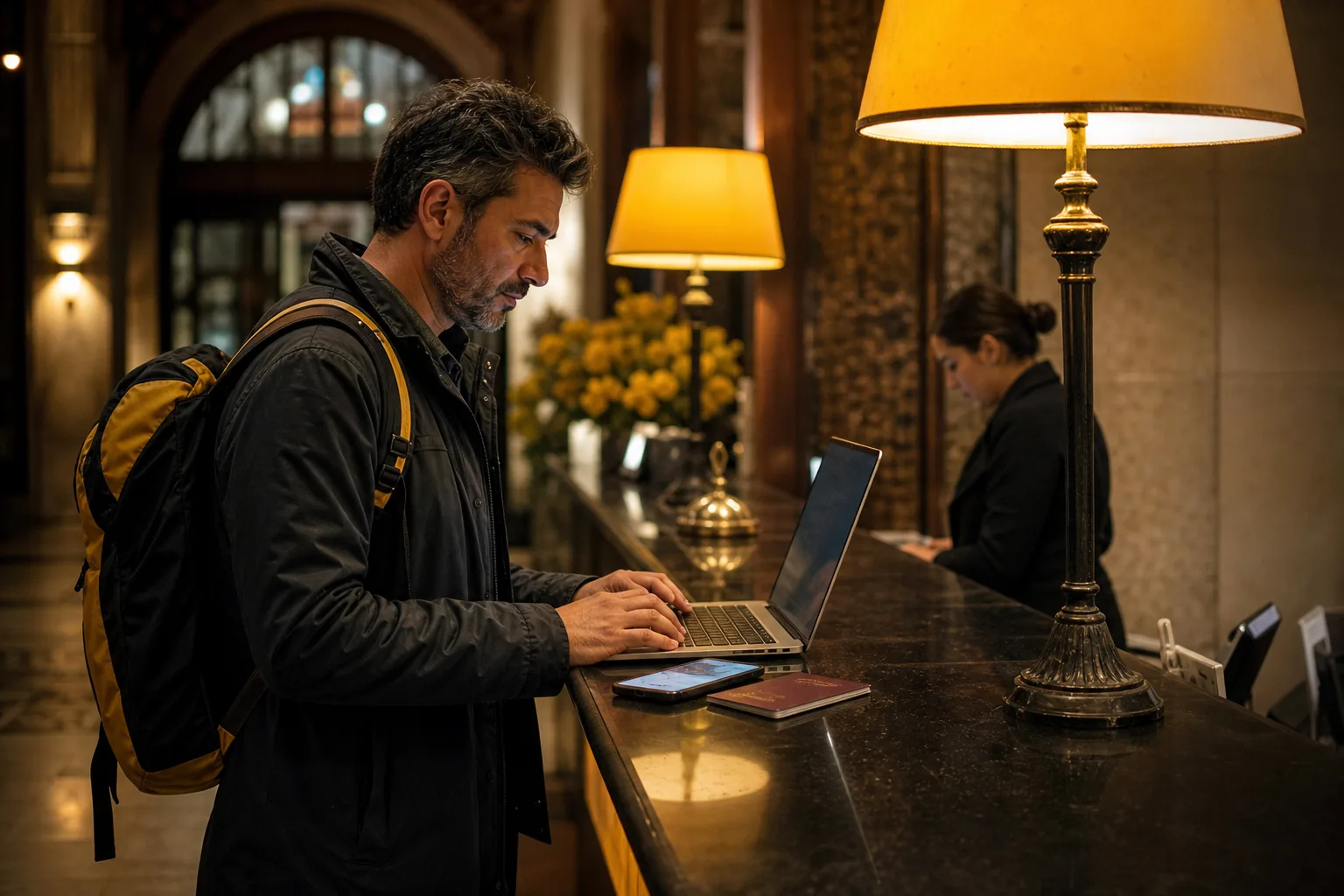
The simplest way to avoid a SIM change on the road is to leave your US line alone. A dual-SIM phone can keep your US SIM or eSIM switched on and use a travel eSIM for mobile data.
globeSIM plans are data only, and validity starts the first time your phone connects in the destination. Your US number stays on the phone for calls and texts, under your own carrier's roaming terms.
Plans for trips such as Mexico, Canada, the United Kingdom and Japan are on their destination pages. Check on our compatible phones page that your phone takes an eSIM.
The phone must also be unlocked. A phone locked to your US carrier only accepts that carrier's SIMs and eSIMs, so ask your carrier to unlock it before you travel.
Is your phone eSIM-compatible?
Search our list of phones, or let the page detect yours.
Signs of a SIM swap while you are away
The FTC lists two warning signs: your phone suddenly has no data, texts or calls, or your carrier unexpectedly tells you that your SIM was activated on a new device (FTC advice on SIM swap scams).
Abroad, a phone without service can also have a network or roaming setting problem. A notice about a SIM change that you did not ask for is the stronger sign.
- Contact your carrier at once to take back your number, then change your account passwords.
- Check your bank and card accounts for charges or changes that you did not make.
- Use an authentication app or a security key for important accounts, because the FTC warns that text message codes may not stop a SIM swap.
What to do before you fly
A few minutes at home cover the new rules. Most of the steps make sure that you can prove who you are without your phone.
Before you fly: five steps
- 01
Make any SIM or phone change at home
Moving your number to an eSIM triggers the new checks.
- 02
Update the email on your carrier account
The FCC names email as another way to verify you.
- 03
Save your account PIN where you can reach it
A password manager on another device works.
- 04
Turn on the SIM change lock
Turn it off only while you switch phones, then back on.
- 05
Add a travel eSIM for data
Your US SIM stays in place, so there is no SIM change.
What the new rules leave to each carrier
The 2023 order also sets similar protections for moving your number to another carrier, called a port-out: secure checks, an immediate notice and a free port-out lock. The November 2026 notice sets the 17 December date only for the SIM change rules.
Each carrier chooses its own methods, so the steps, app menus and lock names will differ. Check your carrier's account security page before you travel, and again after 17 December.
FAQ
Does the FCC SIM swap protection rule affect travel eSIMs?
Not directly. The rules cover your US carrier moving your number to a new SIM. A travel eSIM from another provider is a separate data line, so adding it does not ask your carrier to move your number.
Is the SIM change lock free?
Yes. The FCC rules say carriers must offer the lock at no cost to all customers, prepaid and postpaid. It is optional, and the carrier cannot change your SIM while it is on.
Can I move my number to a new phone while abroad?
You can try, but your carrier must verify you securely first, and the FCC refused an exception for travellers. Make the change at home, or prepare backup methods such as email.
Will my carrier delay a SIM change?
The FCC did not require a waiting period. Carriers may add a delay when they judge it necessary against fraud, but the FCC said this should not hold up legitimate requests.
What should I do if my number is hijacked abroad?
Contact your carrier at once to take back the number, then change your account passwords. The FTC also advises checking your bank and card accounts for changes that you did not make.
Sources
- Protecting Consumers From SIM-Swap and Port-Out Fraud: effective and compliance dates (Federal Communications Commission, Federal Register, checked Nov 22, 2026)
- Protecting Consumers from SIM-Swap and Port-Out Fraud (FCC 23-95) (Federal Communications Commission, Federal Register, checked Nov 22, 2026)
- How does Verizon protect my account? (Verizon, checked Nov 22, 2026)
- SIM Swap Scams: How to Protect Yourself (Federal Trade Commission, checked Nov 22, 2026)